
 English
Aluminum, Stainless, or Galvanized? Choosing the Right Insulation Cladding Material
After a pipe, tank, or duct has been properly insulated, one more decision affects its service life just as much as the insulation itself: the cladding (jacketing) material wrapped around the outside. Cladding protects the insulation from weather, moisture, and physical damage. Pick the wrong type, and the insulation underneath can fail early even if it was installed correctly in the first place.
Why Cladding Matters as Much as the Insulation
Most insulation failures don’t start with the insulation itself — they start with water or moisture getting in through cladding that has degraded, torn, or was never suited to the site conditions. Once moisture gets trapped inside the insulation, thermal performance drops, and on metal piping it can lead to corrosion under insulation (CUI). The right cladding is the first line of defense that keeps insulation performing at full efficiency over its service life.
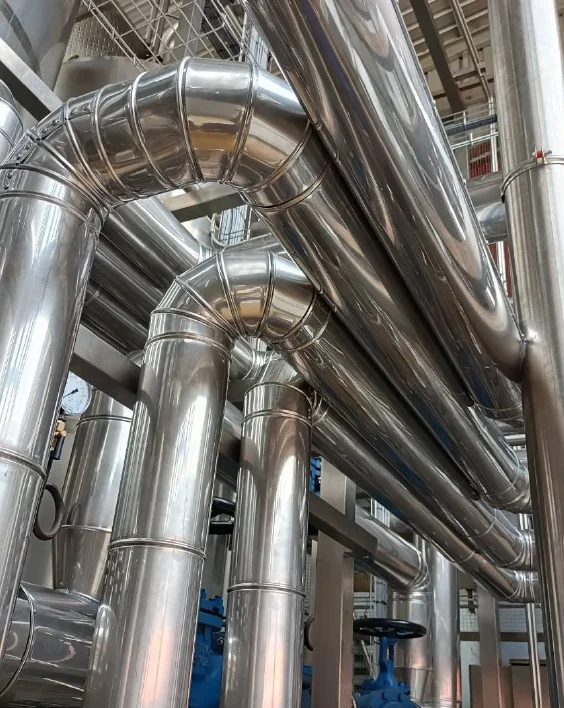
Aluminum vs Stainless vs Galvanized
- Aluminum: lightweight, easy to form, and reasonably priced. It holds up well in general indoor and outdoor environments without aggressive chemical exposure, making it the most widely used option for pipe, tank, and duct work in standard factory settings.
- Stainless steel: noticeably more corrosion-resistant than aluminum, especially where there’s chemical exposure, salt-laden air, continuous high humidity, or frequent washdown. It suits food plants, chemical plants, and coastal sites, at a higher cost and heavier weight.
- Galvanized steel: the lowest-cost of the three, suited to indoor applications with mild conditions. The zinc coating degrades faster when exposed outdoors or to continuous moisture, so it works best on non-critical runs or budget-constrained projects.
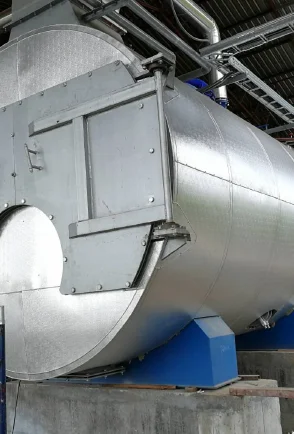
Factors to Weigh Before Choosing
- Site environment: indoor or outdoor, continuous chemical vapor or high humidity, proximity to the coast.
- Operating temperature of the insulated surface: very hot or very cold lines may call for a thickness and material suited to repeated expansion and contraction.
- Metal compatibility: avoid letting dissimilar metals touch directly without isolation, which can trigger galvanic corrosion at the contact point.
- Lifecycle budget: a cheaper material may need replacing sooner — compare total cost over the service life, not just the initial install price.
- Seams and joints: whichever material is chosen, poorly sealed seams let water in regardless. Good material selection still needs correct installation craftsmanship.
Common Mistakes
The most common mistake is choosing cladding by price alone without considering actual site conditions — for example, using galvanized steel in a continuously humid area where it rusts faster than expected, or using aluminum near the coast without accounting for salt-air corrosion. Another frequently overlooked issue is letting dissimilar metals contact each other directly at connection points, which accelerates corrosion beyond what either material would experience alone.
Summary
No single cladding material is best in every case — the right choice depends on site conditions, budget, and the service life required. Centrotec’s team can advise on the cladding material best suited to your actual site and install it correctly. Get in touch to discuss your project.