 ไทย
 English
 日本語
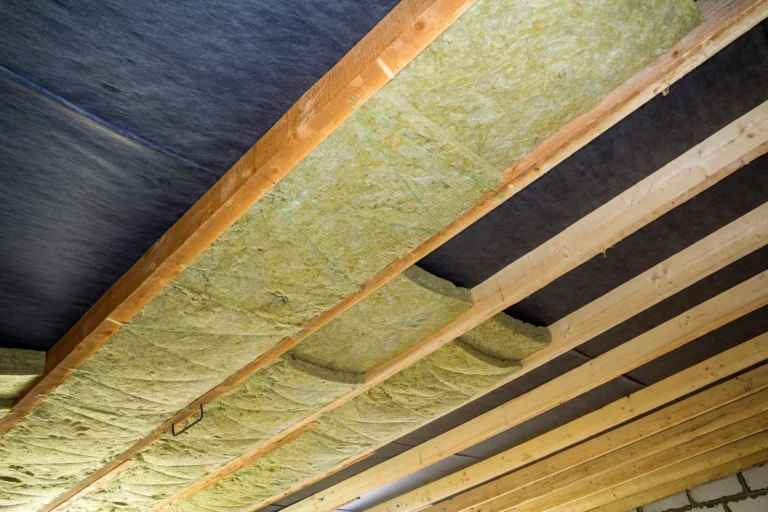
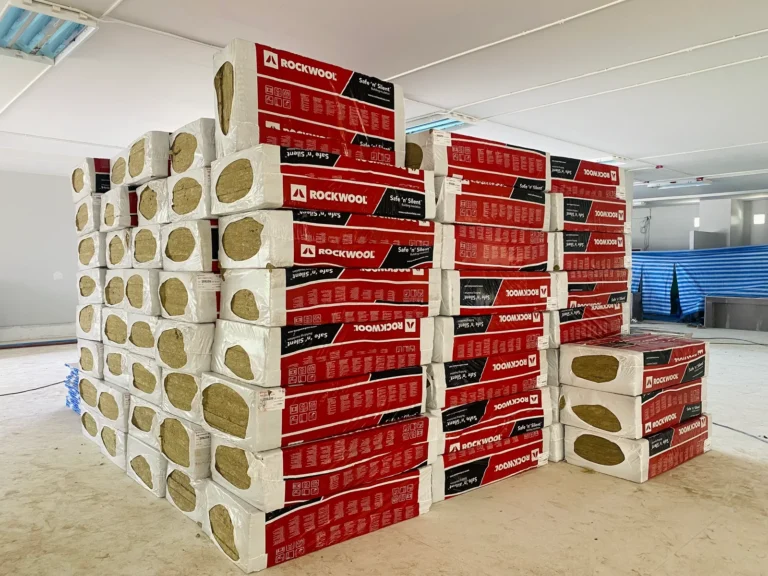
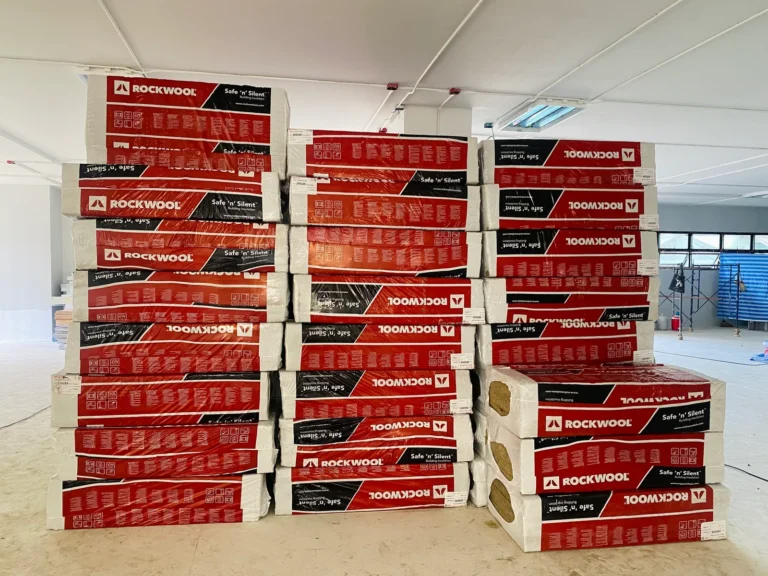
Non-Combustible Stone Wool Insulation
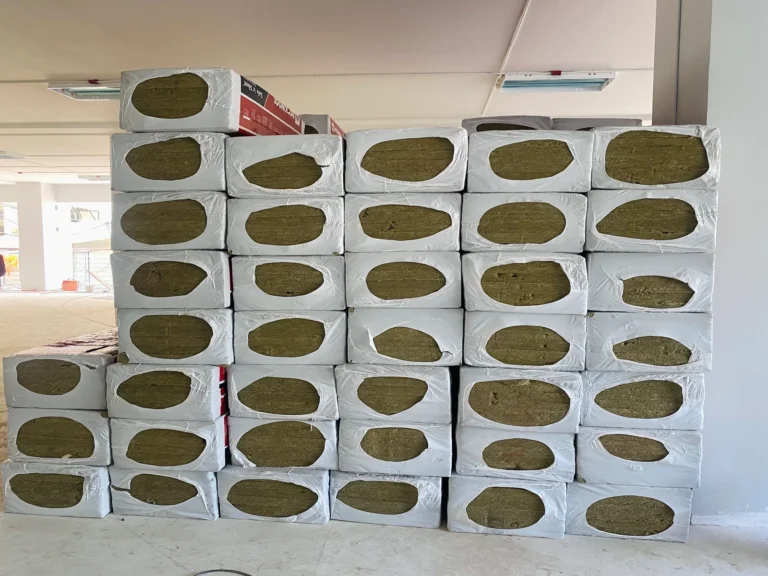
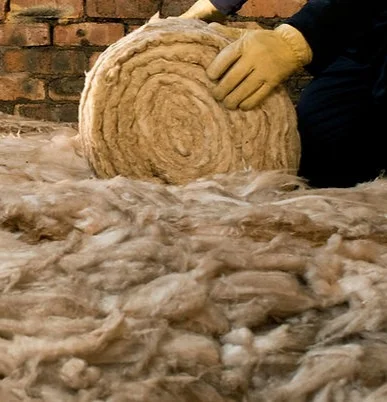
Rockwool (stone wool) is made from basalt and recycled mineral waste, melted and spun into fibers, with a melting point above 1,000°C. Key properties: thermal insulation, fire resistance, moisture/condensation control, sound absorption, AC energy savings, durability, and sustainability.
Heat and Fire
Two Rockwool Product Groups: Buildings and Industry
- Buildings, offices and homes (this page) — Cool 'n' Comfort roof insulation and Safe 'n' Silent Pro wall sound insulation
- Industrial insulation — ROCKWOOL ProRox pipe sections, wired mats, slabs and blankets for pipes, tanks and high-temperature equipment
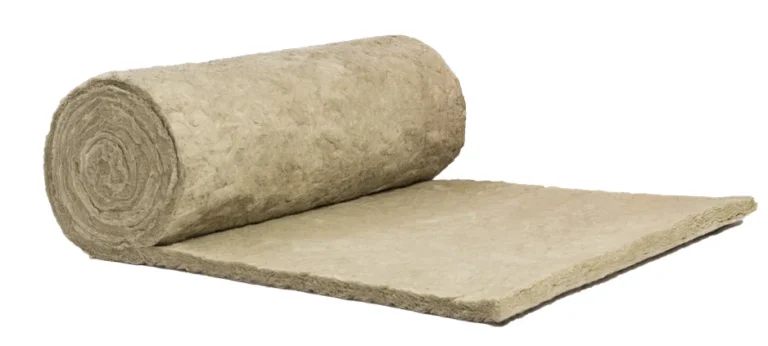
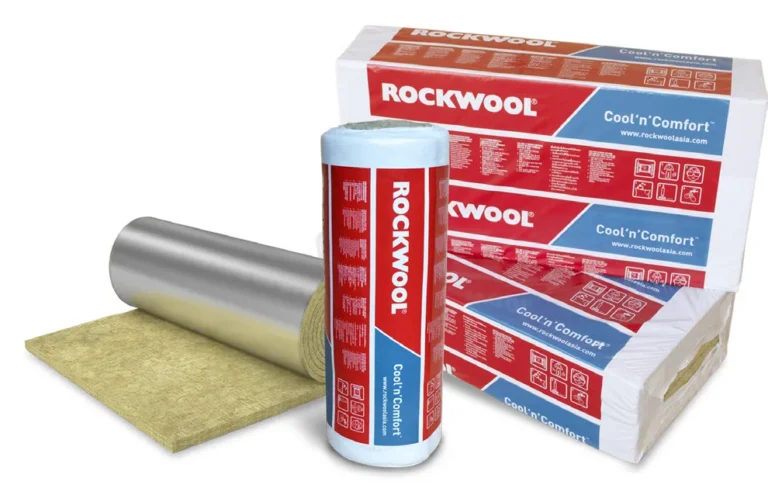
Rockwool Cool 'n' Comfort Roof Insulation
Cool 'n' Comfort Specifications
| Property | RL920 | RL940 | SL920 | SL940 | SL950 | SL960 |
|---|---|---|---|---|---|---|
| Density (kg/m³) | 40 | 60 | 40 | 60 | 80 | 100 |
| Thermal resistance at 50 mm (R, m²K/W) | 1.39 | 1.47 | 1.39 | 1.47 | 1.47 | 1.52 |
| Thermal conductivity at 20°C (W/mK) | 0.036 | 0.034 | 0.036 | 0.034 | 0.034 | 0.033 |
| Water absorption, partial immersion (kg/m²) | 1.00 | 1.00 | 0.5 | 0.5 | 0.5 | 0.5 |
| Sound absorption at 50 mm (NRC) | 1.00 | 1.05 | 1.00 | 1.05 | 1.05 | 1.05 |
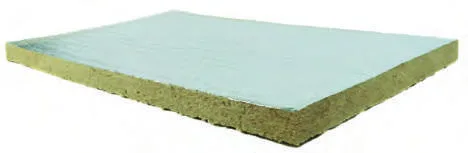
| Form | Blanket | Blanket | Slab | Slab | Slab | Slab |
| Recommended use | Single-skin roofs for canteens, walkways and well-ventilated pavilions | Single-skin roofs for homes: better thermal performance, long-term energy savings | Double-skin roofs for residential and commercial buildings | Double-skin roofs for factories and warehouses, with acoustic damping | Double-skin roofs for exhibition halls, schools and campuses | Double-skin roofs for concert halls and airports needing strong low-frequency acoustics |
Common to All Cool 'n' Comfort Models
- Non-combustible, Euroclass A1, gross heat of combustion ≤ 3.2 MJ/kg (EN 13501-1 / BS EN 1182); melting point above 1,000°C (ASTM E794)
- Moisture absorption below 0.04% by volume (ASTM C1104); silicone water repellent as standard
- Thickness 50, 75 and 100 mm; plain or with one- or two-sided aluminium foil facing
- No asbestos and no CFCs, HFCs or HCFCs; will not rot or grow mould
- Designed to meet Malaysian Standard MS1525 and Singapore BCA Green Mark
Safe 'n' Silent Pro — Features
Water and moisture resistant
Non-combustible
Quick installation
Sound absorption
Energy savings
Fire non-spread — used in steel-frame wall systems for hospitals, cinemas, schools, offices, homes, and factories.
Use Cases
Industrial plants and power stations
Acoustic and studio projects
Fire protection systems
Rockwool Is Safe and Is Not Asbestos
In Thai, the words for stone wool and asbestos sound alike, so the two are often confused. Rockwool is made from basalt and dolomite, melted and spun into fibres in a process that mimics a volcano. Its fibres are too large to be inhaled into the lungs and break with blunt ends, like a stick of chalk. Asbestos fibres are needle-sharp, keep splitting into finer fibres and stay airborne.
Rockwool vs Asbestos
| Rockwool insulation | Asbestos | |
|---|---|---|
| Raw material | Basalt and dolomite | Silicate minerals |
| Origin | Rock melted and spun into fibre, mimicking natural volcanic processes | Naturally deposited silicate minerals |
| Properties | Melting point above 1,000°C; non-combustible, does not spread flame or produce smoke | Withstands 700–1,000°C; tough and durable |
| Fibre size | About 4–6 microns in diameter, too large to be inhaled into the lungs | Under 1 micron, can be inhaled into the lungs |
| How fibres break | Blunt ends, like chalk | Needle-sharp, keep splitting finer and stay airborne |
| Uses | Fire, heat and sound insulation; sound absorption | Industrial components such as brake linings, cement pipes, roof tiles |
| IARC classification | Group 3: not classifiable as carcinogenic to humans | Group 1: carcinogenic to humans |
Tested by Leading Global and Thai Institutes
| Institute | Abbreviation | Result |
|---|---|---|
| International Agency for Research on Cancer, World Health Organization | IARC | Not classified as carcinogenic to humans |
| Fibreglass and Rockwool Insulation Manufacturers Association of Australia | FARIMA | Not classified as carcinogenic to humans |
| TÜV SÜD testing and certification | TÜV SÜD | No asbestos found |
| Thailand Institute of Scientific and Technological Research | TISTR | No asbestos found |
| National Metal and Materials Technology Center (Thailand) | MTEC | No asbestos found |
Installing Rockwool Safely
-
1
Work in a well-ventilated areaUnder normal conditions, fibre and dust levels are already below common exposure limits.
-
2
Wear long sleeves, long trousers and glovesAdd a dust mask where ventilation is poor.
-
3
Wear dust gogglesWhen installing overhead.
-
4
Bag offcutsPut waste in black bags and dispose of it properly.
-
5
Clean up with a vacuumVacuum insulation dust instead of sweeping.
-
6
Wash hands with waterThen clean up as usual. Any skin irritation some installers feel is temporary.
Source: ROCKWOOL (Thailand) brochure "How safe is ROCKWOOL insulation". Read more: Differences between Rockwool insulation and asbestos
Installation Examples