
 English
How Thick Should Industrial Insulation Be? Understanding Economic Thickness and Payback Period
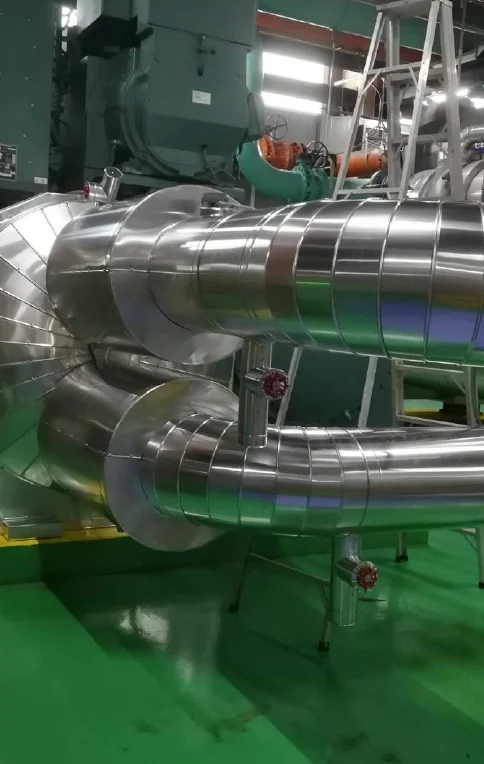
A common question when planning pipe or tank insulation is “how thick should it be?” Many assume thicker always means more energy savings. In reality, there’s a point where adding more thickness stops paying for itself. The principle used to find that point is called economic thickness.
Why the Thickest Insulation Isn’t Always the Best Answer
Thicker insulation does reduce heat or cold loss further, but the return from each additional layer shrinks (diminishing returns), while material, labor, and cladding costs rise almost linearly with thickness. At some point, the annual energy savings from one more layer fall below the extra cost of installing it. The most cost-effective thickness isn’t the maximum possible — it’s the point where total cost (installation plus energy lost over the system’s lifetime) is lowest.
Variables to Consider
- Energy cost: the price of the energy the system uses (electricity, steam, fuel). The more expensive energy is, the further the optimal thickness shifts upward.
- Operating temperature and the temperature differential: the greater the gap between the system’s temperature and the surrounding air, the more energy is lost per unit area, making thicker insulation pay off faster.
- Annual operating hours: a system that runs continuously recovers the cost of thicker insulation faster than one used intermittently.
- Material and installation labor cost: the marginal cost of each additional thickness layer, including the larger cladding it requires.
- Acceptable payback period: this varies by facility — some target 1-2 years, others accept up to 5.
A General Evaluation Approach
The common method is comparing the total cost of ownership at each thickness level — calculating the annual value of energy lost at different thicknesses against the added installation cost, then finding the thickness where the sum is lowest. Don’t look only at the initial installation price: insulation that’s too thin may look cheaper upfront but accumulates energy costs over the years that far exceed the price difference of a thicker option.
Things to Watch For
- Don’t borrow a thickness table from a different type of system: hot and cold systems follow different calculation principles, and each system has its own temperature and operating hours, so one system’s optimal thickness doesn’t transfer directly to another.
- Account for real installation constraints: valves, fittings, and tight spaces may make the calculated thickness impractical to install — this needs to be planned together with the installation team on site.
- Energy prices change: the evaluation should account for future energy price trends, not just today’s fixed price.
Summary
The “most cost-effective” insulation thickness isn’t always the thickest — it’s the balance point between installation cost and energy saved over the system’s lifetime. Centrotec’s team can help evaluate the right insulation thickness for your system and budget. Get in touch to discuss your project.