
 ไทย
 English
 日本語
Generator Room Too Loud? A Practical Soundproofing Guide
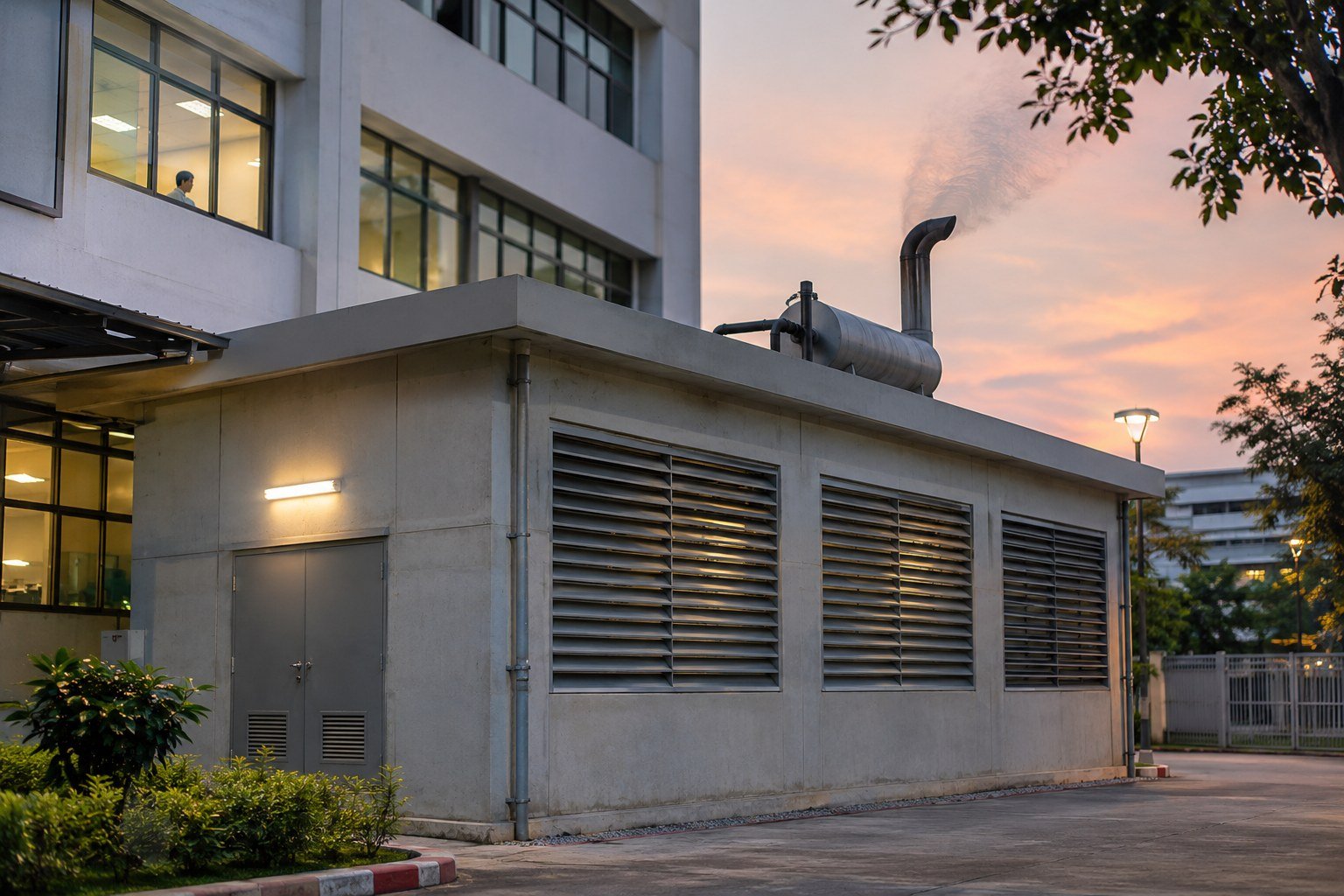
Standby generators are essential in factories, hospitals, office buildings and data centres. Every time one runs, for a weekly test or a real outage, the engine and radiator fan fill the room with noise that leaks into offices, wards or the homes next door. This article explains why generator rooms are so loud, and what kind of acoustic lining suits a room with an engine, heat and fuel.
Why generator rooms are louder than you expect
- Several noise sources at once: the engine, the exhaust and the radiator fan all run together.
- Bare walls reflect sound: most generator rooms have bare concrete walls and flat ceilings, so sound keeps bouncing around (reverberation) and the level inside builds up.
- Constant vibration: loosely fixed materials sag or fall off over time.
- Fire risk: with engine heat and fuel in the room, combustible acoustic materials such as some foams should be avoided.
Centrotec’s four-layer lining system
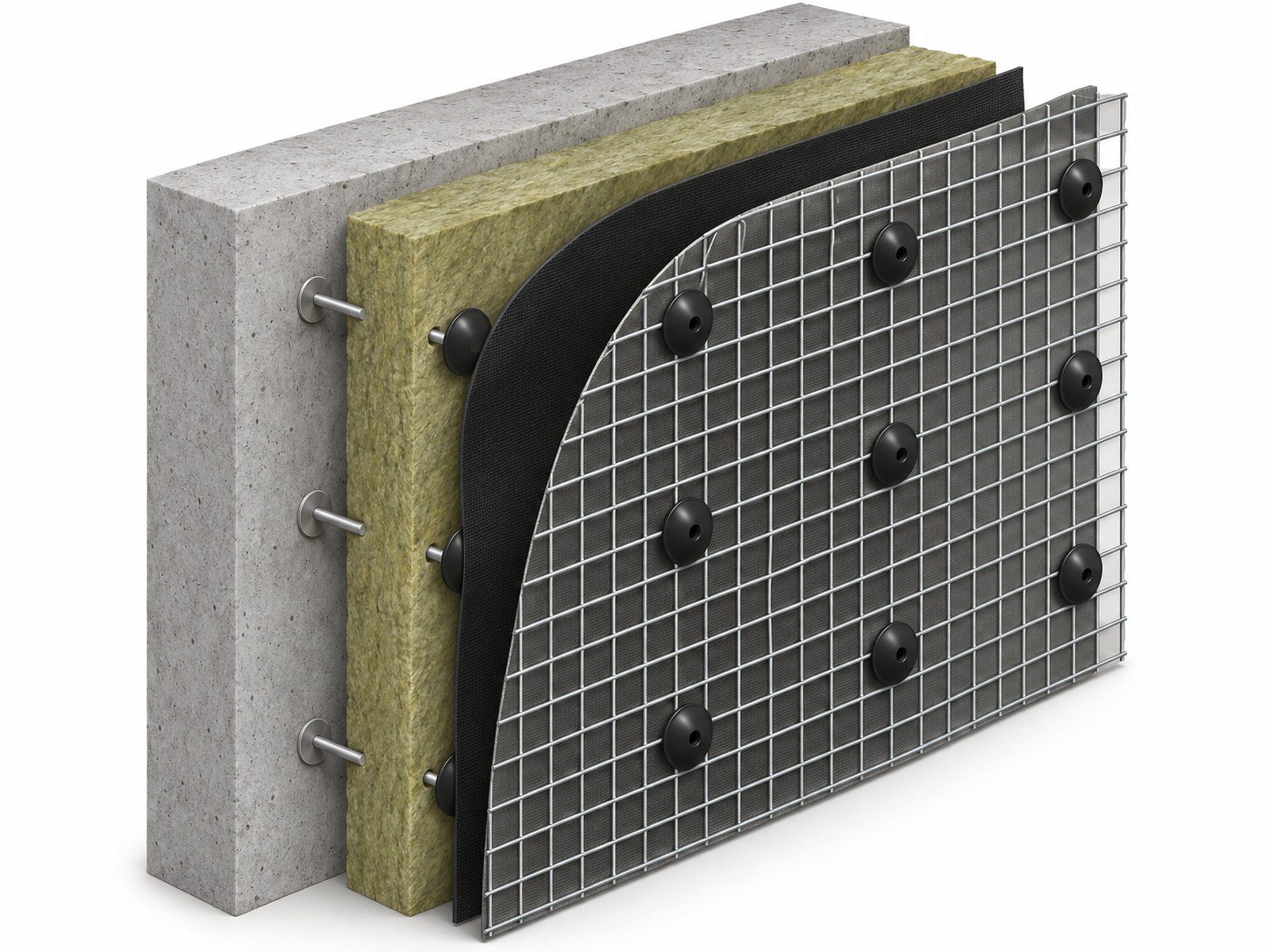
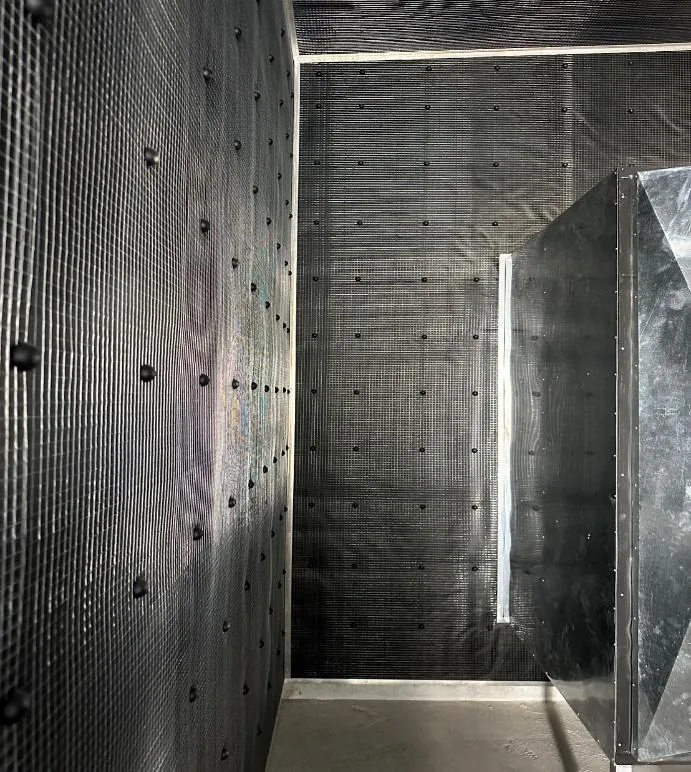
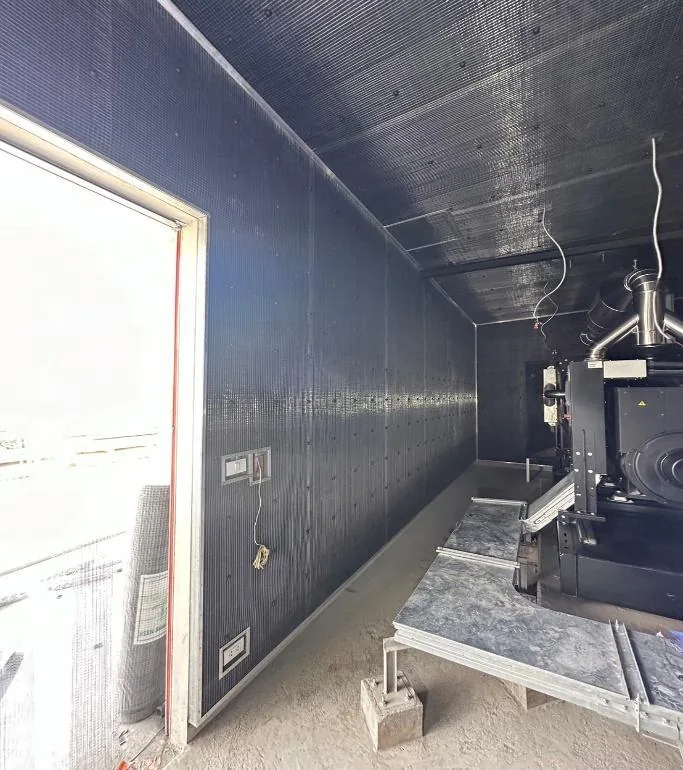
On a real project approved by the owner through a Material Approval, Centrotec lined the generator room’s walls and ceiling with four layers. Every layer is non-combustible.
| Layer | Material | Role |
|---|---|---|
| 1 | ROCKWOOL Safe ‘n’ Silent Pro 370 stone wool (80 kg/m³) | Sound absorption: NRC 1.00 at 50 mm; non-combustible Class A1 (EN 13501-1); melting point above 1,000°C |
| 2 | AK Glass 3025R-AC black acrylic-coated glass fabric (0.20 mm / 170 g/m²) | Faces the insulation, keeps fibres in, clean finish |
| 3 | Square wire mesh, 1/2″ opening | Holds the boards tight against the wall, resists vibration |
| 4 | Black dome washers | Lock every layer onto the pins; black to match the fabric |
Why Pro 370? The ROCKWOOL Safe ‘n’ Silent Pro range comes in several densities. For a plant room that needs both high absorption and a robust board, 80 kg/m³ is a good balance. See every grade compared on our ROCKWOOL Safe ‘n’ Silent page.
Facing options: instead of coated glass fabric with wire mesh, a perforated aluminium facing is also available, depending on the application and how durable the surface needs to be.
Installation steps
- Fix insulation pins to walls and ceiling at the specified spacing.
- Press the ROCKWOOL boards on with no gaps. Open joints are where sound escapes.
- Face with black coated glass fabric to keep fibres in and give a neat finish.
- Add wire mesh and lock it with black dome washers, so nothing sags or shakes loose under engine vibration.
Commonly overlooked points
- Doors and ventilation openings: sound escapes most easily through openings, so assess them together with the lining.
- Exhaust pipe inside the room: it is hot as well as loud, so insulate it separately.
- Material safety: stone wool (Rockwool) is not asbestos. See the test results in Rockwool is safe, not asbestos.
FAQ
Will the room become completely silent?
No. An absorptive lining reduces reverberation inside the room and the noise that escapes, but the real result also depends on the structure, doors and vents. That’s why a site survey should come before the design.
The room gets very hot. Will the insulation degrade quickly?
Stone wool is non-combustible and has a melting point above 1,000°C, so it suits plant rooms. The fabric facing and wire mesh protect it from everyday mechanical damage.
Can it be installed while the generator is in service?
Usually the work is done while the set is not running, planned with the maintenance team so backup power is not affected.
Summary
A generator room needs acoustic materials that absorb well, withstand vibration and do not burn. A four-layer system of ROCKWOOL Safe ‘n’ Silent Pro 370, coated glass fabric, wire mesh and dome washers covers all three. See real project photos on our Soundproof Insulation page.
Generator room disturbing the neighbours? Contact Centrotec for a site survey and a lining system designed for your room.