 ไทย
 English
 日本語
How to Choose the Right Jacket Size? A Deep Dive into Fitting Robot Jackets for UR, FANUC, and ABB
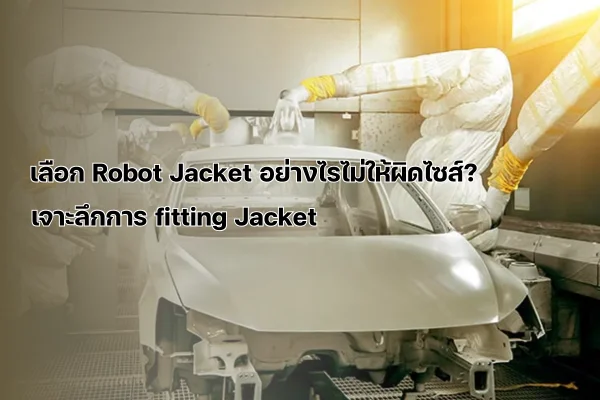
View product details and order a Robot Protection Suit / Protective Cover
You wouldn’t buy a shirt without checking the size — so why skip that step when choosing a Robot Jacket?
Fitting a jacket for an industrial robot isn’t just about tossing a cloth over it and calling it a day. It’s about precise fitting at every joint to ensure smooth movement, safety, and long-term durability. Especially for popular robot brands like UR, FANUC, and ABB, each with its unique structure and motion range — this article guides you in choosing the perfectly tailored Robot Jacket that’s neither too tight nor too loose, won’t hinder operations, and won’t cost you a second order.
Know Your Robot’s Structure Before Ordering a Jacket
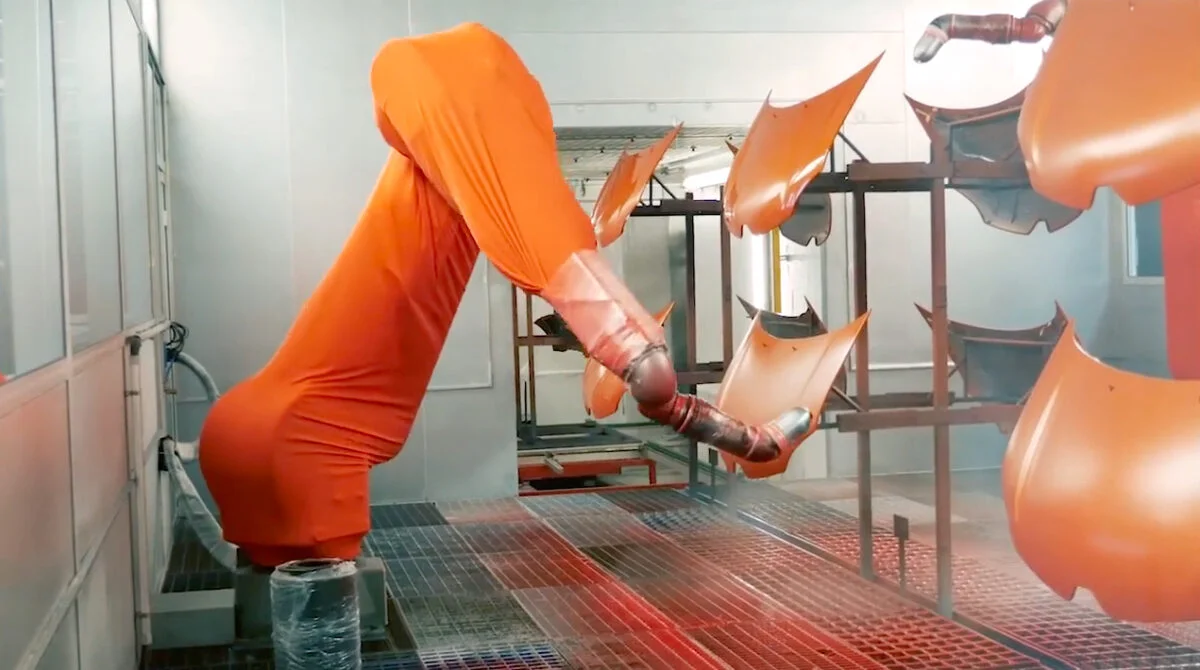
Every robot brand has its own unique features — size, joint configuration, movement range, and engineering design. If you’ve ever ordered a jacket by “eyeballing the size,” that’s a major reason it might not function at its best.
UR (Universal Robots): Precision at the Joints is Key
UR models like the UR5e or UR10e are known for their lightweight arms and high freedom of motion. Key fitting tips include:
-
Carefully measure the length of each arm segment in detail
-
Focus on the elbow and wrist joints, ensuring the jacket doesn’t bunch or restrict movement
-
Choose highly flexible materials, as UR robots move fast and fluidly
FANUC: Big Arms, Heavy Duty — Jacket Must Follow the Motion
FANUC models like the M-20iA or R-2000iC are often used in heavy-duty applications. Their large arms and dense cabling require attention to:
-
Inconsistent joint spacing — request a spec sheet from the jacket manufacturer
-
Jackets with accordion-style folds or dual-layer pleats to accommodate angular movement
-
Confirm openings for external cables or tubes are included in the design
ABB: Tough Performer, Slim Arm — Sensors Must Stay Visible
ABB models such as the IRB 2600 or IRB 6700 have multiple sensors and ports near the wrist, so the jacket must:
-
Include openings for sensors and cameras in precise locations
-
Be tailored to the slim arm shape to avoid puffiness
-
Use heat-resistant materials if the robot handles welding tasks
Before You Order: 3 Key Checks for Every Robot Jacket
Before commissioning a jacket for any robot brand, run through these 3 critical checks:
-
Do you have clear drawings/3D files or exact measurements (not just the model name)?
-
Have you specified the task — e.g., painting, welding, or material handling?
-
Have you selected materials and stitching style that match the robot’s movement patterns?
Choosing the right jacket doesn’t just make your robot look good — it extends the life of your equipment. Each robot has its own character. To order the right jacket, you need to “know it well enough” to ensure a perfect fit that allows full-range motion without obstruction or wear.
A well-fitted jacket = a long-lasting, high-performing robot. It’s a smart investment in both efficiency and durability.